
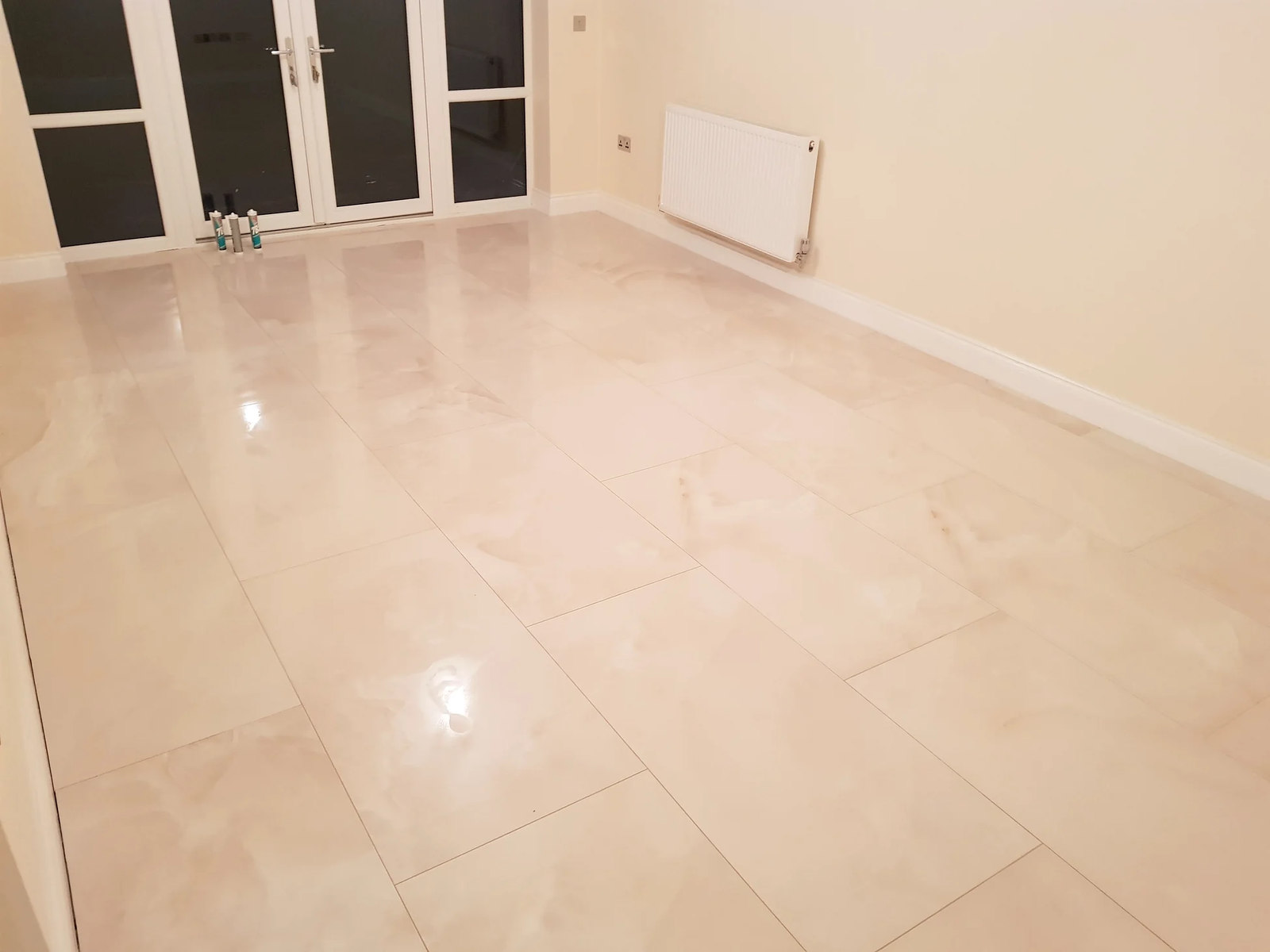
The quality of tiling is determined as much by preparation and layout as by the tile itself. Before comparing quotations, identify the surface, tile dimensions, pattern and installation requirements.
1. Measure and choose the tile
Measure each floor and wall separately. Include recesses, returns and steps where relevant. Choose tiles appropriate to the area, including slip resistance for wet floors and outdoor use. The purchase quantity normally includes additional tiles for cuts, pattern alignment, breakages and future repairs; the required allowance varies with the layout.
2. Check the substrate before tiling
Walls and floors need a sound, stable and suitably flat substrate. Timber, new screeds, underfloor heating and existing tiled surfaces can require specific preparation. Decoupling systems may be appropriate depending on the substrate and specification. Wet areas need a compatible waterproofing system; tiles and grout alone are not waterproofing.
3. Understand what changes the cost
A straightforward porcelain floor is different from a mosaic, herringbone, natural stone or very large tile installation. Preparation, difficult access, protection, mitred corners, niches, movement joints, edge details and the number of cuts can add work. Outdoor tiling additionally requires a suitable base, falls and drainage. A reliable quotation considers the actual surface and specification rather than a rate alone.
4. Agree what is included
Ask whether preparation, primers, adhesive, grout, trims, sealant, waterproofing, disposal and tile supply are included. Agree the layout, grout colour and edge finish before fixing. Keep spare tiles for future maintenance. Check what the workmanship guarantee covers and follow the tile and grout manufacturer's care instructions.
5. Request a site survey
Share approximate dimensions, photographs, tile size and the existing surface. We can advise on preparation and installation methods, then provide a written quotation after inspecting the project.